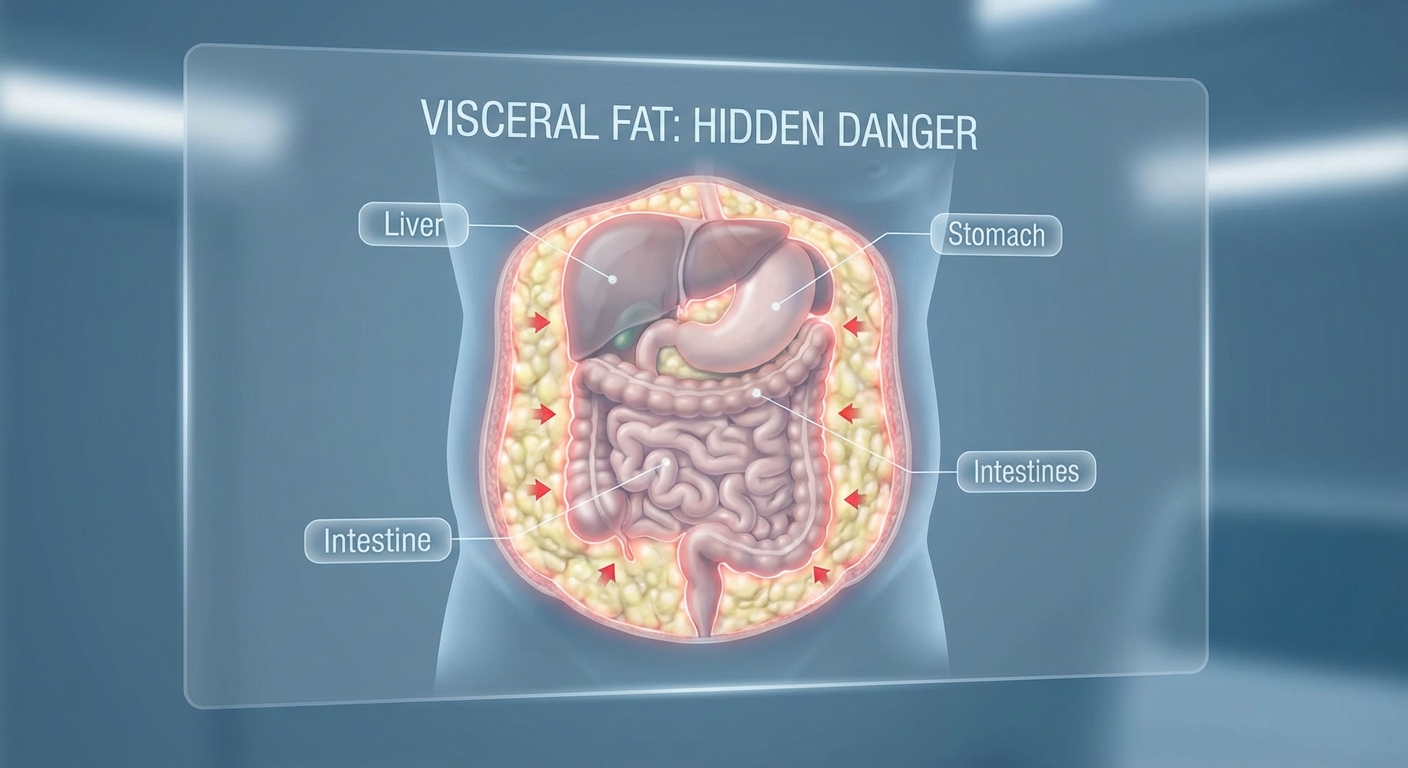
Visceral Fat: The Silent Killer
Why the fat around your organs could be your biggest health threat – and what you can do about it
What is visceral fat really?
When we think of belly fat, we usually picture the visible fat under the skin – subcutaneous fat that you can pinch. But beneath it lurks a far more dangerous problem: visceral fat (also called organ fat).
Visceral fat accumulates between your internal organs – around the liver, pancreas, intestines, and kidneys. It’s invisible, untouchable, and often present in problematic amounts even in people with seemingly “normal” body weight. This makes it so insidious: You can look slim and still carry dangerous amounts of visceral fat.
The term “TOFI” (Thin Outside, Fat Inside) describes exactly this phenomenon – people with normal BMI but high internal fat content.
Why is visceral fat so dangerous?
1. Active Endocrine Organ
Unlike passive subcutaneous fat, visceral fat is an active endocrine organ. It produces a variety of substances that affect your entire metabolism:
- Pro-inflammatory cytokines: Inflammation-promoting messengers like IL-6 and TNF-alpha that cause chronic inflammation in the body
- Adiponectin: This anti-inflammatory hormone is produced less when visceral fat is high
- Resistin: Promotes insulin resistance and inflammation
- Angiotensin: Can cause high blood pressure
2. The Portal System Problem
Visceral fat has direct access to the liver via the portal system (portal vein). Fatty acids and inflammatory markers go directly to the liver, where they can:
- Cause fatty liver disease (NAFLD)
- Promote insulin resistance
- Increase triglyceride production
- Lower HDL cholesterol (the “good” cholesterol)
3. Associated Health Risks
Studies show clear links between high visceral fat and:
| Disease | Risk Increase | Mechanism |
|---|---|---|
| Type 2 Diabetes | 3-5x higher | Insulin resistance, β-cell dysfunction |
| Heart Attack | 2-3x higher | Inflammation, atherosclerosis |
| Stroke | 2x higher | High blood pressure, vascular calcification |
| Fatty Liver | 5-10x higher | Direct fatty acid transport |
| Sleep Apnea | 4x higher | Mechanical compression |
| Alzheimer’s | 2x higher | Neuroinflammation |
| Certain Cancers | 1.5-2x higher | Chronic inflammation |
How to measure visceral fat?
Gold Standard: CT/MRI
The most accurate measurement is via CT scan or MRI, where fat volume is directly quantified. Values above 100 cm² (measured at L4/L5 level) are considered critical.
Clinical Alternatives
1. Bioelectrical Impedance Analysis (BIA)
- How it works: Electrical resistance through the body
- Accuracy: Moderate, trends are more important than absolute values
- Advantage: Quick, non-invasive, inexpensive
2. DEXA Scan
- Gold standard for body composition
- Shows regional fat distribution
- Enables precise tracking over time
3. Waist Circumference
- Simplest method
- Risk increased at: Men >40 inches, Women >35 inches
- Limitation: Doesn’t directly measure visceral fat
4. Visceral Fat Rating (Consumer Devices)
- Smart scales (e.g., Withings, Tanita) estimate based on impedance data
- Scale typically 1-20 or 1-30
- Values above 12-15 indicate increased risk
The Pulselyze Recommendation
For most people, the combination of:
- Regular waist measurements (weekly, same time)
- Smart scale with Visceral Fat Rating (daily, watch trends)
- Annual DEXA scan (for precise baseline)
…offers the best balance of effort and insight.
Causes of visceral fat
Primary Factors
1. Chronic Stress Cortisol, the stress hormone, specifically promotes fat storage in the abdominal area. People with high chronic stress typically show:
- Higher cortisol levels in the morning
- Poorer sleep quality
- Intensified cravings (especially sugar)
2. Poor Sleep
- <6 hours of sleep increases cortisol and ghrelin (hunger hormone)
- Reduces leptin (satiety hormone)
- Disrupts glucose tolerance
3. Excessive Sugar Consumption Fructose (from sugar and HFCS) is preferentially metabolized in the liver and promotes:
- De novo lipogenesis (new fat formation)
- Fatty liver
- Visceral fat storage
4. Physical Inactivity
- Insulin sensitivity decreases
- Lipoprotein lipase activity drops
- Calorie surplus is primarily stored viscerally
5. Chronic Inflammation A vicious cycle: Inflammation promotes visceral fat, visceral fat produces inflammatory markers.
Strategies for reducing visceral fat
The Evidence-Based Roadmap
Phase 1: Nutrition (70% of success)
1. Drastically reduce sugar intake
- Eliminate added sugar (target: <25g/day)
- Reduce processed carbohydrates
- Focus on complex carbs with high fiber content
2. Increase protein
- Target: 0.7-1.0g per pound of body weight
- Thermic effect: Protein burns 20-30% of its calories during digestion
- Satiety effect reduces overall calorie intake
3. Prioritize healthy fats
- Omega-3 fatty acids (fish, flaxseeds, walnuts)
- Monounsaturated fats (olive oil, avocados)
- Avoid trans fats and excessive omega-6
4. Intermittent Fasting
- 16:8 or 18:6 protocols show promising results
- Improves insulin sensitivity
- Promotes fat burning over longer periods
5. Fiber
- Target: 30-40g daily
- Prebiotic fibers promote healthy gut flora
- Short-chain fatty acids (butyrate) have anti-inflammatory effects
Phase 2: Exercise (25% of success)
Zone 2 Training
- 3-4x per week, 45-60 minutes
- 60-70% of maximum heart rate
- Optimal for fat oxidation
Strength Training
- 2-3x per week
- Focus on large muscle groups
- More muscle mass = higher resting metabolic rate
Increase NEAT
- 8,000-10,000 steps daily
- Stand instead of sit
- Active breaks every 60 minutes
Phase 3: Lifestyle (5% – but multiplicative)
Optimize sleep
- 7-9 hours of quality sleep
- Consistent sleep times
- Cool, complete darkness
Stress management
- Meditation or breathing exercises (10 min/day)
- Regular downtime
- Maintain social connections
Reduce alcohol
- Prioritizes liver for detox
- Promotes inflammation
- Empty calories without satiety
Realistic Expectations
How fast does it work?
Visceral fat responds faster to interventions than subcutaneous fat:
| Timeframe | Expected Change |
|---|---|
| 1-2 weeks | First improvements in glucose tolerance |
| 4 weeks | Visible reduction in waist circumference |
| 8-12 weeks | Significant reduction in visceral fat rating |
| 6 months | Sustainable metabolic improvement |
Warning signs requiring a doctor visit
- Waist circumference >40 inches (men) / >35 inches (women) despite normal weight
- Family history of diabetes or heart disease + belly fat
- Blood pressure >140/90 mmHg
- Fasting glucose >100 mg/dL
Summary: Your Action Plan
- Measure your baseline: Waist circumference + Smart scale visceral fat rating
- Eliminate sugar: The biggest lever for visceral fat
- Prioritize protein: Satiates and preserves muscle mass
- Move daily: Zone 2 + steps
- Sleep enough: 7-9 hours, consistent
- Manage stress: Cortisol control is crucial
- Track progress: Weekly measurements, not daily
Visceral fat is indeed a “silent killer” – but a killer you can combat very effectively with the right strategies. The good news: It responds faster to positive changes than almost any other health marker.
Start today. Your organs will thank you.
Have questions about your body composition or want to track your data? Get started with Pulselyze and receive personalized insights into your metabolic health.