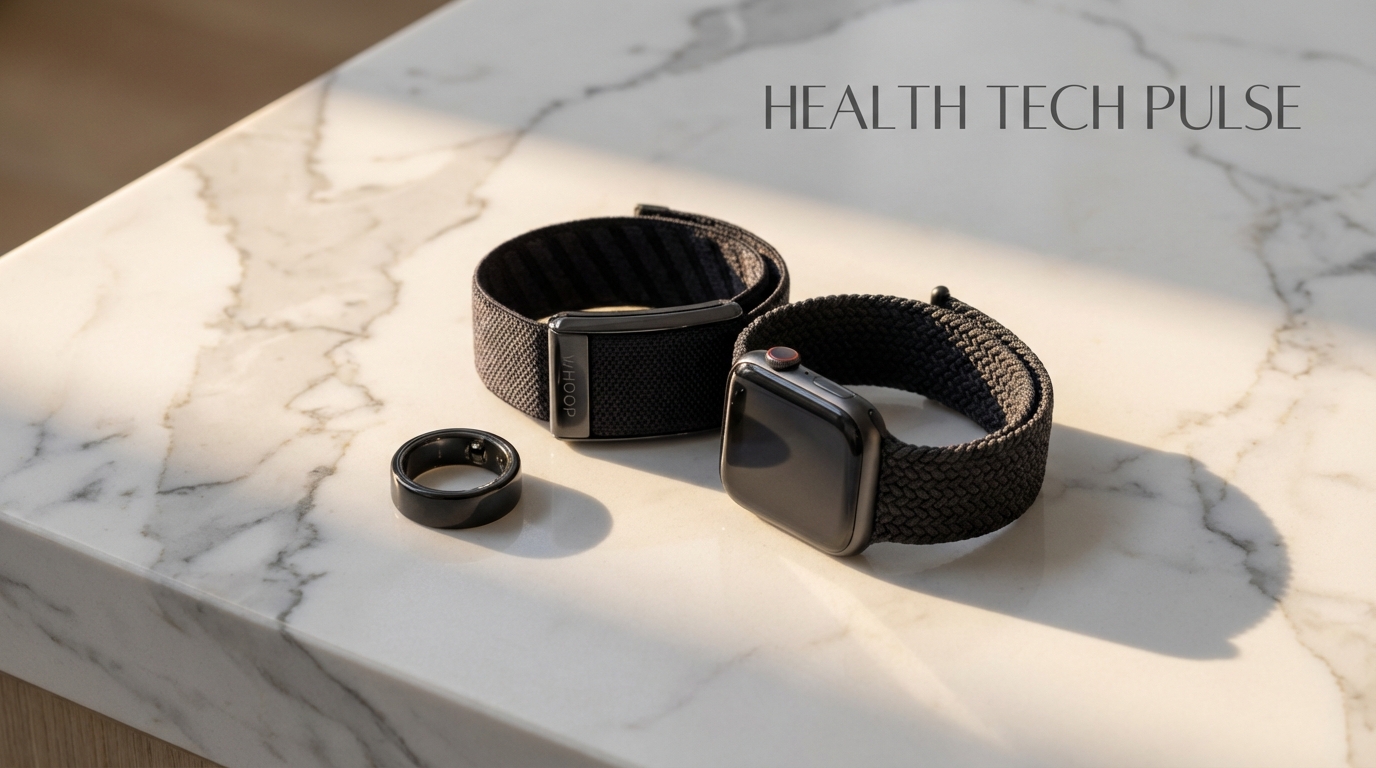
Measuring your sleep quality has never been easier—or more confusing. Oura Ring, Whoop Strap, and Apple Watch all promise precise sleep analysis, but which tracker truly delivers the best data?
In this article, we compare the three most popular sleep trackers based on clinical studies, user experiences, and practical usability.
The Basics: What Do Sleep Trackers Measure?
All three devices use different sensors to track your sleep quality:
Common Metrics
- Sleep duration – Total time in bed
- Sleep stages – Deep sleep, REM sleep, light sleep, wake periods
- Heart rate – Resting pulse during sleep
- Heart rate variability (HRV) – Recovery indicator
- Respiratory rate – Breaths per minute
- Movement – Restlessness during the night
However, measurement quality varies significantly.
Oura Ring: The Specialist
Technology
The Oura Ring sits on your finger and measures:
- Infrared PPG sensors for heart rate and SpO2
- Temperature sensor for body temperature fluctuations
- 3D accelerometer for movement
Strengths
Sleep stage precision: According to a 2024 study published in JMIR mHealth, Oura achieves a sensitivity of 76–79.5% when distinguishing sleep stages compared to polysomnography (PSG, gold standard).
Temperature tracking: Unique among consumer trackers—can detect fever, cycle tracking, and metabolic changes.
Comfort: Many users report that the ring becomes invisible after a few days. No wrist irritation, no display distractions.
Battery life: 4-7 days—significantly longer than Apple Watch.
Weaknesses
No real-time data: You get your sleep scores in the morning, no live monitoring.
Subscription model: €5.99/month on top of ring price (€299-549).
Limited fitness features: No GPS, no workouts beyond activity tracking.
Ideal for
- Sleep optimizers who want maximum precision
- People who don’t want to wear a watch
- Women using cycle tracking
Whoop Strap: The Athlete
Technology
Whoop Strap is worn on the wrist (or bicep with special band):
- 5 LED PPG sensors for HR/HRV
- 4 photodiodes for higher precision
- Accelerometer and gyroscope
Strengths
Recovery Score: Whoop’s main feature is the daily Recovery Score (0-100%), combining sleep quality, HRV, and resting heart rate. Very useful for training management.
Strain tracking: Measures your body’s cardiovascular load throughout the day. Perfect for athletes.
No distractions: No display, no notifications. Pure data.
Battery life: 4-5 days, with innovative charging battery that charges while wearing (5 minutes = 1 day).
Weaknesses
Sleep stage accuracy: According to Reddit community and various reviews, Whoop is less precise with sleep stages than Oura. Sensitivity estimated at 65-75%.
Subscription requirement: Only available as subscription (€30/month with annual plan, band included).
No display: Can be a pro for some, but also means no quick checks without app.
Activity overestimation: Some users report Whoop counting passive movements (e.g., driving) as training.
Ideal for
- Competitive athletes
- People optimizing training and recovery
- Users wanting to minimize distractions
Apple Watch: The All-Rounder
Technology
Apple Watch (Series 9, Series 10, Ultra 2) uses:
- Green and red LEDs + infrared LEDs for HR/HRV
- Accelerometer and gyroscope
- SpO2 sensor (from Series 6)
- Temperature sensor (from Series 8)
Strengths
Versatility: Not just a sleep tracker but a full smartwatch with apps, notifications, GPS, music, etc.
Sleep stage precision (since watchOS 10): Clinical studies show Apple Watch achieves sensitivity of 50-86%—the wide range comes from variations in algorithms and models.
Sleep apnea detection: From watchOS 11 (2024), Apple Watch can detect sleep apnea—a medical feature Oura and Whoop don’t (yet) have.
No subscription: All sleep features are free (except optional Fitness+).
Respiratory rate tracking: Available since watchOS 9.
Weaknesses
Battery life: 18-24 hours. You must charge daily, complicating sleep tracking (charging strategies: e.g., evening before sleep).
Comfort: Many report wrist irritation or discomfort sleeping with a watch.
Sleep stages less precise: In direct comparison, Apple Watch lags behind Oura (but not catastrophically).
Distractions: Notifications can disturb sleep if not in “Sleep Mode.”
Ideal for
- Apple ecosystem users
- People wanting a smartwatch with sleep tracking
- Users needing sleep apnea monitoring
The Scientific Comparison
A 2024 study (PMC11511193) compared Oura, Fitbit, and Apple Watch directly:
| Metric | Oura Ring | Apple Watch | Whoop* |
|---|---|---|---|
| Sleep stage sensitivity | 76-79.5% | 50-86% | ~65-75% (estimated) |
| Sleep stage precision | 77-79.5% | 72-88% | ~70-75% |
| Total sleep time accuracy | Very high | High | High |
| HRV accuracy | Very high | High | Very high |
| Battery life | 4-7 days | 1 day | 4-5 days |
*Whoop data based on user reviews and indirect comparisons, as Whoop hasn’t participated in all clinical studies.
Value Comparison
Oura Ring (Gen 3)
- Purchase: €299-549 (depending on finish)
- Monthly: €5.99
- Year 1 Total: ~€371
- Year 2+: ~€72/year
Whoop 4.0
- Purchase: €0 (included in subscription)
- Monthly: ~€30 (with 12-month plan)
- Annually: ~€360
- Flexibility: Cancelable
Apple Watch Series 10
- Purchase: €449-849
- Monthly: €0 (no subscription required)
- Year 1 Total: €449-849
- Year 2+: €0
Pulselyze Recommendation: Which Tracker for Which Goal?
Choose Oura Ring if:
- Sleep is your top priority
- You value temperature tracking
- You don’t need smartwatch features
- You’re willing to pay a subscription
- You want maximum sleep comfort
Choose Whoop Strap if:
- You’re an athlete optimizing training + recovery
- You dislike distractions (display)
- Strain tracking is important to you
- You’re willing to pay monthly
Choose Apple Watch if:
- You have an iPhone and want an all-in-one device
- You don’t want to pay a subscription
- You need sleep apnea monitoring
- Daily charging isn’t a problem
- You use smartwatch features (apps, GPS, music)
Combinations: Why Some Wear Both
Interestingly, many biohackers and athletes report wearing Oura + Whoop or Oura + Apple Watch:
- Oura for sleep, Whoop/Apple Watch for workouts
- Data cross-validation
- Leveraging different strengths
Conclusion: The Best Sleep Tracker Is…
…the one you consistently wear.
Precision matters, but consistency beats perfection. If you already have an Apple Watch and wear it daily, it’s probably better for you than an Oura Ring you forget in a drawer after two weeks.
Our Top Picks 2026:
- Best sleep precision: Oura Ring Gen 3
- Best athlete solution: Whoop 4.0
- Best value (long-term): Apple Watch Series 10
- Best comfort: Oura Ring (you forget after days)
Already using one of these trackers? Share your experiences in the comments—or track your data with Pulselyze and compare yourself! 🚀
About Pulselyze: Your personal health data hub. Connect Oura, Whoop, Apple Health, and more—all data in one place, AI-powered insights included.