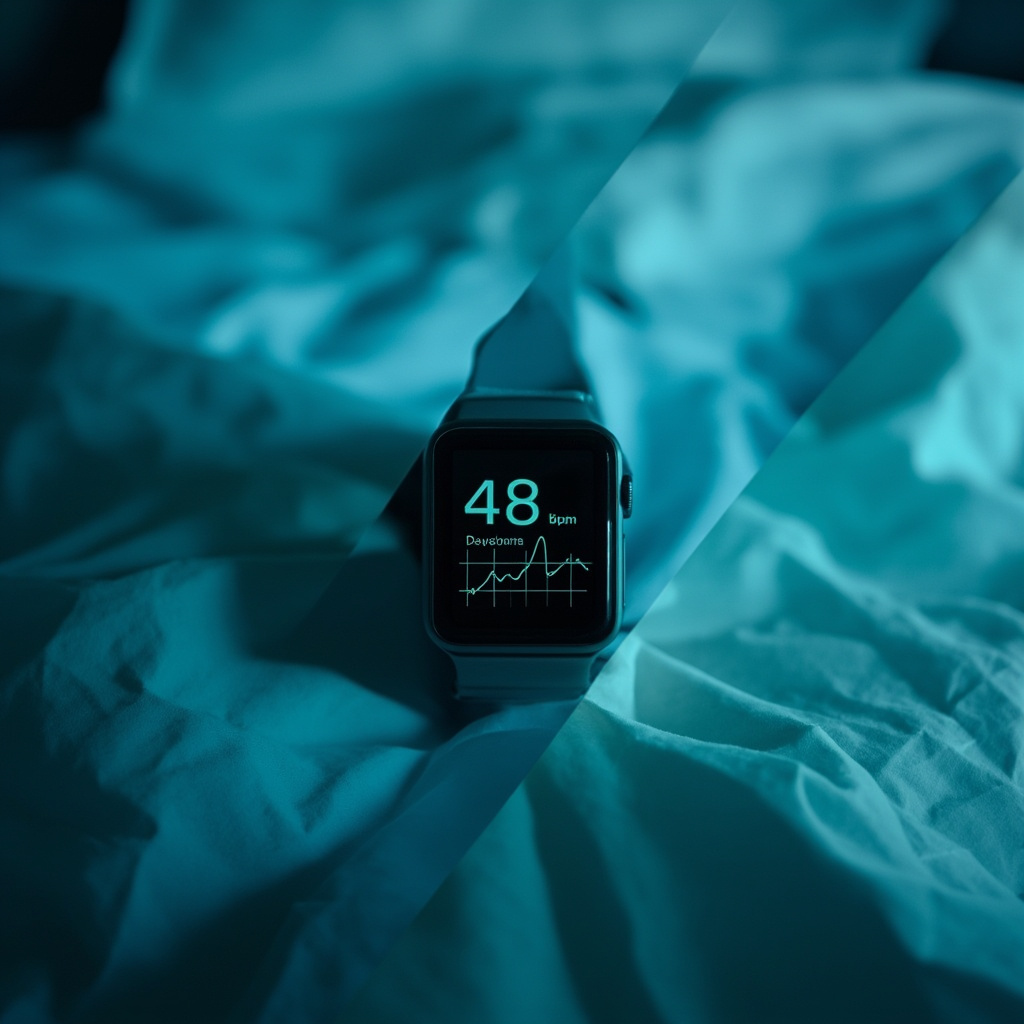
Resting Heart Rate Below 50: Healthy Adaptation or Warning Sign?
Seeing 47 bpm on your smartwatch can be unsettling. Most people immediately wonder: “Is my heart beating too slowly?” The honest answer is: it depends on context.
A resting heart rate below 50 can be completely normal in well-trained people. But in other situations—especially with symptoms—it can indicate bradycardia that deserves medical evaluation.
In this guide, you’ll learn:
- what “below 50” actually means physiologically,
- when low values are a sign of fitness,
- which warning signs matter,
- and how to improve resting heart rate in a healthy, sustainable way.
What Counts as a Normal Resting Heart Rate?
Your resting heart rate (RHR) is the number of beats per minute while awake and at rest—ideally measured first thing in the morning, before getting out of bed.
Typical adult reference ranges:
- 60–100 bpm: standard clinical normal range
- 40–60 bpm: common in physically trained people
- <40 bpm: may require closer evaluation depending on symptoms/context
Important: in real life, “normal” is not only a chart value. Your personal baseline matters more than one isolated reading. If you’ve been at 52–58 for months and suddenly trend toward 44, that shift is relevant even if you feel okay.
Why Trained People Often Sit Below 50
A lower resting heart rate often reflects an efficient cardiovascular system. With consistent endurance training, several adaptations occur:
-
Higher stroke volume
Your heart pumps more blood per beat, so it needs fewer beats at rest. -
Stronger parasympathetic tone
Vagal activity (“rest-and-digest” mode) increases and slows resting rhythm. -
Better mitochondrial efficiency
Muscles use oxygen more efficiently, reducing baseline demand. -
Lower everyday stress load
Better recovery habits usually reduce sympathetic overdrive.
That’s why endurance athletes frequently show resting rates in the 40s without pathology.
When Below 50 Is Probably Fine
A low resting heart rate is usually physiological when several of these are true:
- you train regularly (especially aerobic work),
- you have no symptoms (dizziness, fainting, exercise intolerance),
- your heart rate rises appropriately with effort,
- your values are stable over weeks,
- sleep quality, daytime energy, and performance are good.
A practical clue: if you feel strong in daily life and training, and your trend is stable, high-40s can simply mean your cardiovascular system is well conditioned.
When It Becomes a Red Flag
The risk is usually not the number alone—it’s number + symptoms + trajectory.
Symptoms that should be evaluated
- recurrent dizziness
- lightheadedness or near-blackouts
- fainting (syncope) or near-syncope
- unusual fatigue / sudden performance drop
- shortness of breath at rest or low effort
- chest pressure or pain
- noticeable cognitive slowing
Higher-risk contexts
- newly low pulse without training progression
- known heart disease
- hypothyroidism
- sleep apnea
- electrolyte disturbances
- heart-rate-lowering drugs (e.g., beta blockers)
Rule of thumb: low pulse + symptoms = get it checked.
Common Causes of Low Heart Rate (Beyond Fitness)
If training doesn’t explain your numbers, common contributors include:
-
Medication effects
Beta blockers, certain calcium channel blockers, antiarrhythmics. -
Thyroid dysfunction
Hypothyroidism can lower metabolic drive and heart rate. -
Sleep-disordered breathing
Sleep apnea can destabilize autonomic control. -
Conduction system issues
Such as sinus node dysfunction or AV block. -
Acute stressors
Illness, severe caloric restriction, dehydration, electrolyte shifts.
This is why context beats isolated wearable data every time.
How to Interpret Smartwatch Data Correctly
Wearables are useful, but not infallible. Motion artifacts, poor skin contact, and nighttime signal issues can produce outliers.
Improve measurement reliability
- measure at consistent times (morning in bed),
- use 7-day averages instead of one-off values,
- log context: sleep, stress, soreness, illness, alcohol,
- verify suspicious trends with chest strap/medical measurement.
Track these, not only bpm
- RHR trend (2–8 weeks)
- HRV trend
- sleep duration + sleep efficiency
- training load vs recovery
- alcohol, travel, heat, illness, jet lag
Most misinterpretations happen when people react to one number instead of the pattern.
Performance Perspective: Lower Is Not Always Better
In fitness culture, lower resting heart rate is often treated as universally better. That’s only partly true.
A very low resting pulse is positive when it is the byproduct of healthy adaptation. It should not become an obsessive target. If someone tries to force numbers down via overtraining, crash dieting, or excessive vagal hacks, they can hurt recovery, hormones, mood, and performance.
What you actually want:
- stable energy,
- high sleep quality,
- resilient autonomic balance,
- and a resting heart rate that matches your physiology.
7 Evidence-Aligned Ways to Improve Resting Heart Rate Safely
If your resting heart rate trends high or unstable, these levers have the strongest impact:
1) Zone 2 cardio (3–5 sessions/week)
Steady aerobic work improves stroke volume and mitochondrial efficiency. Many people see meaningful RHR improvements within 8–12 weeks.
2) Add resistance training
2–3 strength sessions weekly supports metabolic health and long-term cardiovascular resilience.
3) Protect sleep quality
Poor sleep raises sympathetic drive and resting pulse. Aim for 7–9 hours with regular sleep/wake timing.
4) Reduce alcohol load
Even moderate evening alcohol can elevate nighttime heart rate and reduce HRV.
5) Train stress regulation
Slow breathing (about 5–6 breaths/min), daily walks, mindfulness, and digital decompression improve parasympathetic tone.
6) Fix caffeine timing
Late caffeine can increase resting pulse and fragment sleep. Keep the last dose 8–10 hours before bedtime.
7) Avoid chronic overload
If training stress exceeds recovery capacity, resting heart rate often rises instead of falling. Deload weeks are a performance tool, not a weakness.
Decision Framework: What to Do at 46–49 bpm
Use this simple triage:
Case A: Fit, symptom-free, stable trend
- likely physiological adaptation
- continue tracking
- keep recovery and load management consistent
Case B: New trend + fatigue or poor sleep
- monitor for 7–14 days
- review stress, illness, and training load
- adjust training temporarily
Case C: Low pulse + clear symptoms
- seek medical evaluation soon (primary care/cardiology)
- if fainting, chest pain, or severe breathlessness: urgent care
This avoids both unnecessary panic and dangerous underreaction.
How Pulselyze Helps You Make Better Calls
Most apps show daily snapshots. Better decisions require trend context.
With Pulselyze, you can:
- see resting heart rate and HRV trends side by side,
- understand load vs recovery dynamics,
- identify triggers (alcohol, late workouts, sleep debt),
- intervene early before a small drift becomes a bigger problem.
For “below 50,” this matters: don’t react to a single number—interpret the whole system.
14-Day Self-Check Protocol for a Low Resting Pulse
If you notice values below 50, avoid panic and use a structured check instead:
Days 1–3:
- measure at the same time each morning,
- log context (sleep quality, stress, symptoms, perceived recovery),
- note possible triggers (alcohol, poor sleep, illness, heavy training).
Days 4–10:
- avoid extreme training spikes,
- keep sleep/wake timing consistent,
- prioritize hydration and regular meals,
- review RHR together with HRV (not in isolation).
Days 11–14:
- compare your 7-day average,
- check whether performance and daytime energy are stable,
- ask: are there any red-flag symptoms?
If you remain symptom-free with a stable pattern, a low resting pulse is often a normal adaptation. If symptoms appear—or your trend worsens—seek medical evaluation.
This approach is far more useful than reacting emotionally to one smartwatch number.
Common Misinterpretations of “Below 50”
1) “My friend is at 62 and I’m at 48, so I’m healthier”
Not necessarily. Heart rate is highly individual. Your own long-term trend is more meaningful than comparisons.
2) “I saw 45 once, so something is wrong”
Single readings can be noise. Repeated patterns plus symptoms are what matter clinically.
3) “Lower is always better”
Not true. Aggressively chasing lower values can backfire via overload and poor recovery.
4) “No symptoms means no need to monitor”
Even symptom-free people should re-check trends during major routine changes, medication changes, or after illness.
5) “Only cardio matters”
Resting heart rate responds best to a full system: aerobic training, resistance work, sleep, stress regulation, and nutrition.
FAQ
Is a resting heart rate of 48 automatically dangerous?
No. In fit, symptom-free people, it is often normal.
Can heart rate drop below 40 during sleep?
Yes, especially in trained individuals. Clinical relevance depends on symptoms and context.
Can I lower resting heart rate intentionally?
Yes—through training, sleep quality, stress regulation, and reduced alcohol. But health outcomes matter more than chasing the smallest number.
When should I see a doctor?
If low values are new and come with dizziness, syncope, chest symptoms, breathlessness, or major performance decline.
Bottom Line
A resting heart rate below 50 is not automatically excellent and not automatically dangerous. It’s a signal that needs context.
- In trained, symptom-free people, it often reflects strong adaptation.
- With symptoms or an unfavorable trend, it should be medically evaluated.
- Long term, the goal isn’t the lowest number—it’s a resilient system built on smart training, sleep, stress balance, and recovery.
When you interpret resting heart rate together with HRV, sleep, and behavioral context, you make better decisions for both performance and health.
Sources (selected)
- American Heart Association: Resting heart rate and training context
https://www.heart.org/en/healthy-living/fitness/fitness-basics/target-heart-rates - Cleveland Clinic: Bradycardia overview and symptoms
https://my.clevelandclinic.org/health/diseases/17841-bradycardia - Cleveland Clinic: Normal heart rate ranges and influencing factors
https://my.clevelandclinic.org/health/diagnostics/heart-rate - StatPearls (NCBI): Sinus bradycardia etiology and clinical evaluation
https://www.ncbi.nlm.nih.gov/books/NBK493201/