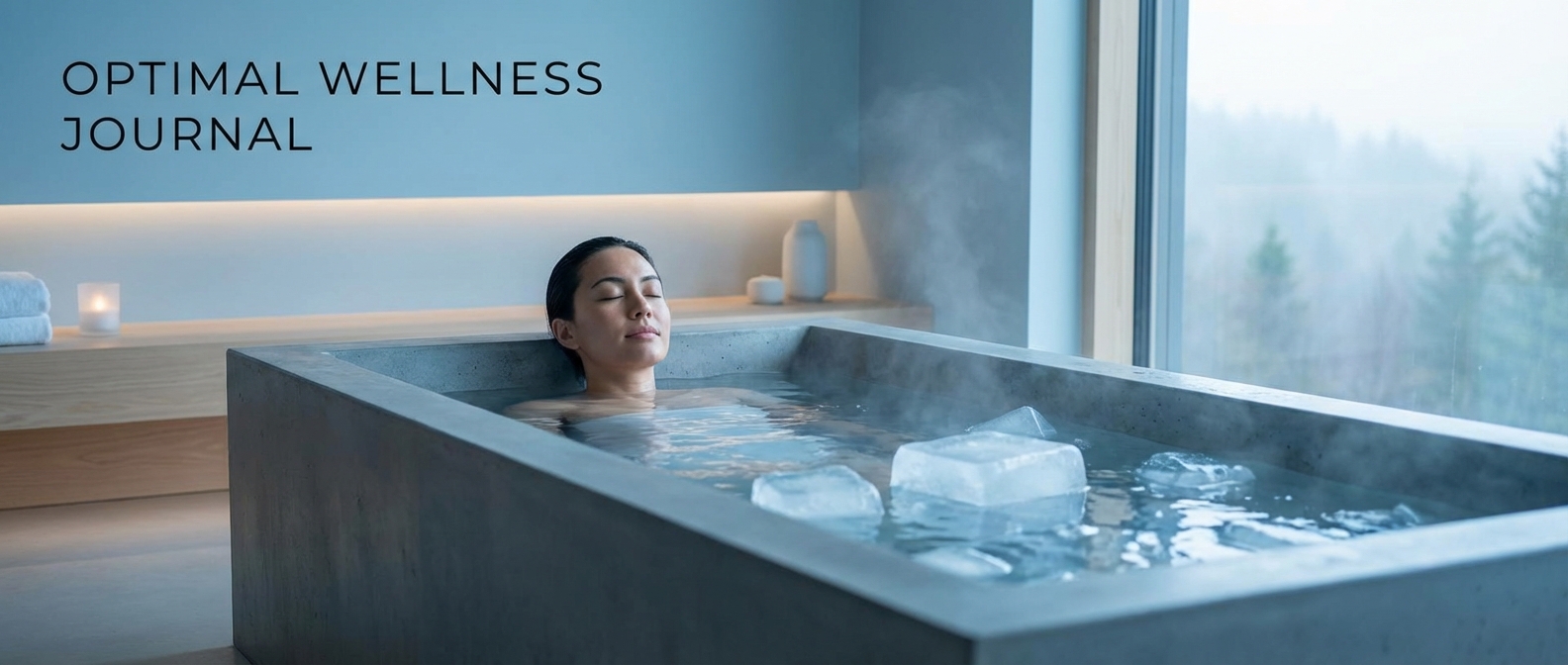
Ice baths and cold plunges are everywhere. From Wim Hof to Andrew Huberman to your local gym - suddenly everyone seems to be jumping into freezing water. But what does the science actually say? Is it worth it, or just an expensive trend?
Spoiler: The data is mixed. Some benefits are real and measurable, others are… creatively interpreted. Here’s what we know.
What Happens in Your Body (Biochemically)
When you immerse yourself in cold water, a lot happens at the neurotransmitter level:
Norepinephrine: The Game-Changer
The most impressive change is the norepinephrine spike. Studies show a 200-300% increase with Cold Water Immersion (CWI). A 2000 study even measured a 530% increase at 14°C (57°F) water temperature.
Norepinephrine is:
- A neurotransmitter for focus and attention
- Anti-inflammatory (reduces inflammation)
- Mood-enhancing
This explains the “ice bath high” - that euphoric feeling after the plunge.
Dopamine: Long-Lasting Boost
While norepinephrine drops quickly, dopamine stays elevated longer. The same study showed a 250% increase that lasted several hours.
This isn’t the short dopamine spike from social media or sugar - it’s a sustained baseline boost. Important for:
- Motivation
- Reward system
- Mood regulation
Other Neurotransmitters
Cold plunges also trigger:
- Serotonin (mood regulation)
- β-Endorphins (natural painkillers)
- Cortisol (stress hormone, temporarily elevated)
What Works: Benefits with Scientific Backing
1. Mental Health & Mood
A 2025 meta-analysis (Harvard Health) found:
- Reduced stress levels
- Improved sleep quality
- Higher subjective quality of life
The neurochemistry makes sense: When you regularly boost your neurotransmitter production, you improve your mental baseline.
Pro tip: 2-3x per week, 2-5 minutes each. More doesn’t necessarily mean better.
2. Acute Recovery After Training
Mayo Clinic (2024): Cold plunges reduce inflammation and muscle soreness immediately after training.
BUT: A newer study (Washington Post, 2025) shows that ice baths can hinder muscle growth and adaptation. The anti-inflammation blocks natural repair processes.
Pro tip:
- After intense cardio: Ice bath can help
- After strength training: Better to wait (4-6 hours later, or not at all)
- Before competitions: Can accelerate acute recovery
3. Immune System (With Caveats)
There’s evidence of increased white blood cells with regular cold plunges. BUT: The studies were mostly done with cold-water swimmers - so it could be the exercise, not the cold.
Conclusion: Possible, but not proven.
4. Metabolism & Brown Fat
Cold activates brown adipose tissue (BAT), which burns calories to produce heat. Regular cold exposure can increase BAT.
Practical benefit? Minimal. You might burn 50-100 extra calories - that’s half a banana. There are better methods for fat loss.
What DOESN’T Work (Or Is Overhyped)
“Boost Fat Burning”
Yes, you burn calories while shivering. No, it won’t make you lean. The effect is minimal.
”Detox”
Your body detoxes through your liver and kidneys, not through cold shock. This is pseudoscience.
”Improve Muscle Growth”
The opposite is true. If you’re training for hypertrophy, ice baths can be counterproductive.
The Optimal Cold Plunge Routine (Data-Based)
Based on current research:
Temperature: 10-15°C (50-59°F)
Duration: 2-5 minutes
Frequency: 2-3x per week
Timing:
- Morning for the neurotransmitter boost
- AFTER cardio/HIIT is okay
- NOT immediately after strength training (wait at least 4h)
Progression:
- Start with 30 seconds at 15°C (59°F)
- Gradually increase to 2-3 minutes
- Lower temperature gradually to 10-12°C (50-54°F)
- Don’t overdo it - more isn’t always better
Who Should Do This?
Yes, if you:
- Seek mental health benefits (mood, focus)
- Do a lot of cardio/endurance training
- Want to mentally challenge yourself (“hormesis” - controlled stress)
No, if you:
- Primarily do strength training/muscle building (at least not right after training)
- Have cold hands/feet (circulation issues?)
- Have heart problems (talk to your doctor FIRST!)
Risks & Warnings
Cold plunges are not harmless:
- Cold Shock Response: Can lead to hyperventilation (dangerous while swimming)
- Cardiovascular stress: Blood pressure spikes temporarily
- Hypothermia: With too long exposure
Safety tips:
- Never alone (especially the first time)
- Don’t jump into the water (enter slowly)
- Breathe controlled (no panic breathing)
- If you’re shivering: get out of the water
Pulselyze & Cold Plunge Tracking
In Pulselyze we track (soon):
- HRV response to cold plunges (should increase long-term)
- Resting heart rate (can decrease with regular exposure)
- Subjective recovery (better/worse than without?)
This way you can track what works for your body - not just follow the hype.
Conclusion: Hype or Legit?
Both.
The neurochemical benefits (dopamine, norepinephrine) are real and measurable. If you feel better after an ice bath - that’s not placebo.
The recovery benefits are context-dependent. Rather counterproductive for strength athletes, helpful for cardio athletes.
The exaggerated claims (detox, fat burning) are bullshit.
Bottom line: If you do it - do it for the mental health benefits and the neurotransmitters. Not because you think it’ll make you lean or jacked.
And above all: Track your data. What works for Wim Hof doesn’t have to work for you.
This article is based on peer-reviewed studies and meta-analyses. Pulselyze helps you track and understand your own data - not blindly follow trends.