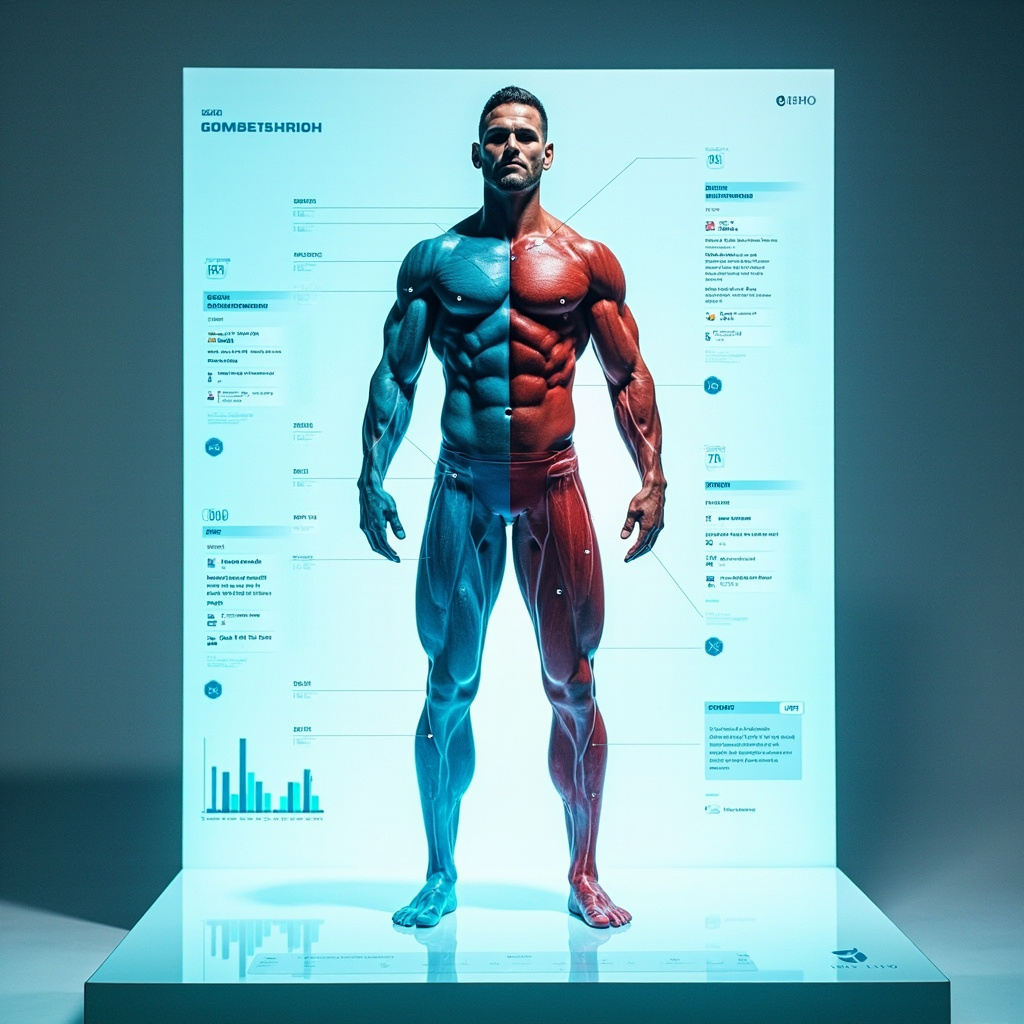
Understanding Body Composition: What Your Scale Won’t Tell You
Why two people with the same weight can be in completely different health – and how to analyze your true body composition
Why Weight is Deceiving
You probably know this: You step on the scale in the morning, it shows 80 kilograms. But what does that actually mean? Is that muscle? Fat? Water? Or maybe a bit of everything?
The simple number on the scale is a poor indicator of your actual health. A bodybuilder with 90 kilograms and 8% body fat is healthier than someone with 70 kilograms and 30% body fat. Weight alone says nothing about the quality of your body.
Body composition describes what your body is made of:
- Fat Mass – Essential body fat + storage fat
- Lean Body Mass – Muscles, bones, organs, water
- Hydration – Water content in the body
In this article, you’ll learn how to measure, interpret, and optimize these metrics.
The Three Main Components of Body Composition
1. Body Fat: More Than Just “Fat”
Your body fat can be divided into two categories:
Essential body fat (~3-5% in men, 10-13% in women) is vital for survival. It protects your organs, serves as an energy reserve, and is crucial for hormone production. Too little is just as problematic as too much.
Storage fat accumulates under the skin (subcutaneous) and around internal organs (visceral). While visceral fat (around organs) can be health-problematic, a moderate amount of subcutaneous fat is unproblematic and even protective.
Recommended Body Fat Percentages:
| Category | Women | Men |
|---|---|---|
| Essential | 10-13% | 3-5% |
| Athletic | 14-20% | 6-13% |
| Fitness | 21-24% | 14-17% |
| Average | 25-31% | 18-24% |
| Obese | 32%+ | 25%+ |
2. Muscle Mass: Your Metabolic Engine
Muscle tissue is metabolically more active than fat tissue. This means:
- More muscle = higher basal metabolic rate (you burn more even at rest)
- Muscles store glycogen and help regulate blood sugar
- Strong muscles protect joints and improve posture
- Muscle is crucial for metabolic health and insulin sensitivity
Muscle mass decreases when you:
- Eat too little protein
- Move too little
- Age (decline starts at 30, accelerates after 50)
- Are chronically stressed or sleep poorly
3. Hydration: The Underestimated Element
Water makes up about 50-60% of your body weight. But it’s unevenly distributed:
- Intracellular: Water inside cells (~65% of body water)
- Extracellular: Water outside cells (~35%), including plasma and interstitial fluid
Why hydration matters:
- Dehydration can reduce performance by up to 25%
- Chronic low hydration is linked to metabolic problems
- Water is essential for nutrient transport, temperature regulation, and detoxification
- Even mild dehydration (1-2%) can impair mood and cognition
Methods for Measuring Body Composition
1. Bioelectrical Impedance (BIA) – The Most Practical Method
Most smart scales and fitness trackers use BIA. A weak electrical current is sent through your body. Fat conducts electricity worse than muscles (which contain more water).
Advantages:
- Quick and easy
- Affordable (every smart scale)
- Suitable for regular measurements
Disadvantages:
- Influenced by hydration status, meals, time of day
- Less accurate than DEXA or hydrodensitometry
- Differences between devices can be significant
Pulselyze tip: Always measure under the same conditions (morning fasting, after bathroom) for comparable results.
2. DEXA Scan – The Gold Standard
DEXA (Dual-Energy X-ray Absorptiometry) uses low-dose X-rays to measure body fat, muscle mass, and bone density.
Advantages:
- Very accurate (error rate ~1-2%)
- Distinguishes between visceral and subcutaneous fat
- Also measures bone health
Disadvantages:
- Not available everywhere
- Cost (~50-150€ per scan)
- Not suitable for frequent measurements
3. Hydrodensitometry (Underwater Weighing)
The most accurate method, but rarely used. You get submerged in a water tank. Since muscle is denser than fat, body composition can be calculated from the displaced water.
4. Calipers (Skinfold Measurement)
Using special calipers, you measure the thickness of skinfolds at various body points. Body fat percentage is calculated using formulas.
Advantages:
- Inexpensive
- No expensive equipment needed
- An experienced person can do it relatively accurately
Disadvantages:
- Requires experience
- Only measures subcutaneous fat
- Less suitable for very lean or very obese individuals
Practical Application: What to Do with the Data
Tracking Over Time
Body composition is a trend, not a snapshot. More important than a single measurement is the development over weeks and months.
Recommended tracking frequency:
- BIA (smart scale): 1-2x per week, always under same conditions
- DEXA: Every 3-6 months for accurate assessment
- Caliper: Every 2-4 weeks
Optimal Strategies by Goal
Goal: Lose fat
- Avoid calorie surplus, but don’t go too low
- High protein (1.6-2.2g per kg body weight)
- Strength training preserves muscle
- Sleep and stress management are crucial
Goal: Build muscle
- Slight calorie surplus (100-300 kcal)
- High protein
- Strength training with progression
- Enough sleep for recovery
Goal: Optimize health
- Focus on reducing visceral fat
- Maintain or build muscle mass
- Pay attention to good hydration
- Regular movement, especially after prolonged sitting
Common Interpretation Mistakes
1. Measuring Too Often
Daily fluctuations of 0.5-1kg are normal – this is often water retention, not fat. Wait at least a week between measurements.
2. Only Looking at Weight
Stagnant weight with decreasing waist circumference usually means muscle gain with fat loss – that’s good!
3. Ignoring Hydration
Your body fat percentage can fluctuate by 2-3%, simply because you’re dehydrated. Drink consistently 2-3 liters per day.
4. Comparing Different Methods
A DEXA scan often shows different values than your smart scale. Don’t compare apples to oranges – stick with one method.
Conclusion: The Scale is Just One Tool
Knowing your weight is useful, but it doesn’t tell the whole story. Body composition – the ratio of fat to muscle to water – gives you a much more accurate picture of your health.
The good news: With the right tools and some knowledge, you can regularly track your body composition and improve it. Whether with a smart scale at home or a DEXA scan at the doctor – the data helps you make informed decisions.
Pulselyze helps you track your body composition data and analyze it over time. Because in the end, it’s not the number on the scale that matters – it’s how healthy and capable your body is.
Tracking tip: Always measure your body composition at the same time of day (preferably morning fasting) and under the same conditions. This makes your data comparable so you can see real trends.